A 7-Point Framework for Bottle Lamps That Look Warm, Not Gimmicky
 Priya RamanSenior Analyst
Most people judge an LED bottle lamp from 3 feet away in a product photo; the lamp is actually won or lost from 12 inches away, where glare, bottle fit, and visible hotspots become obvious. In my own room checks, a warm LED puck on an amber bottle felt roughly twice as comfortable to sit beside as the same lamp on clear glass, even when the measured light output was similar.
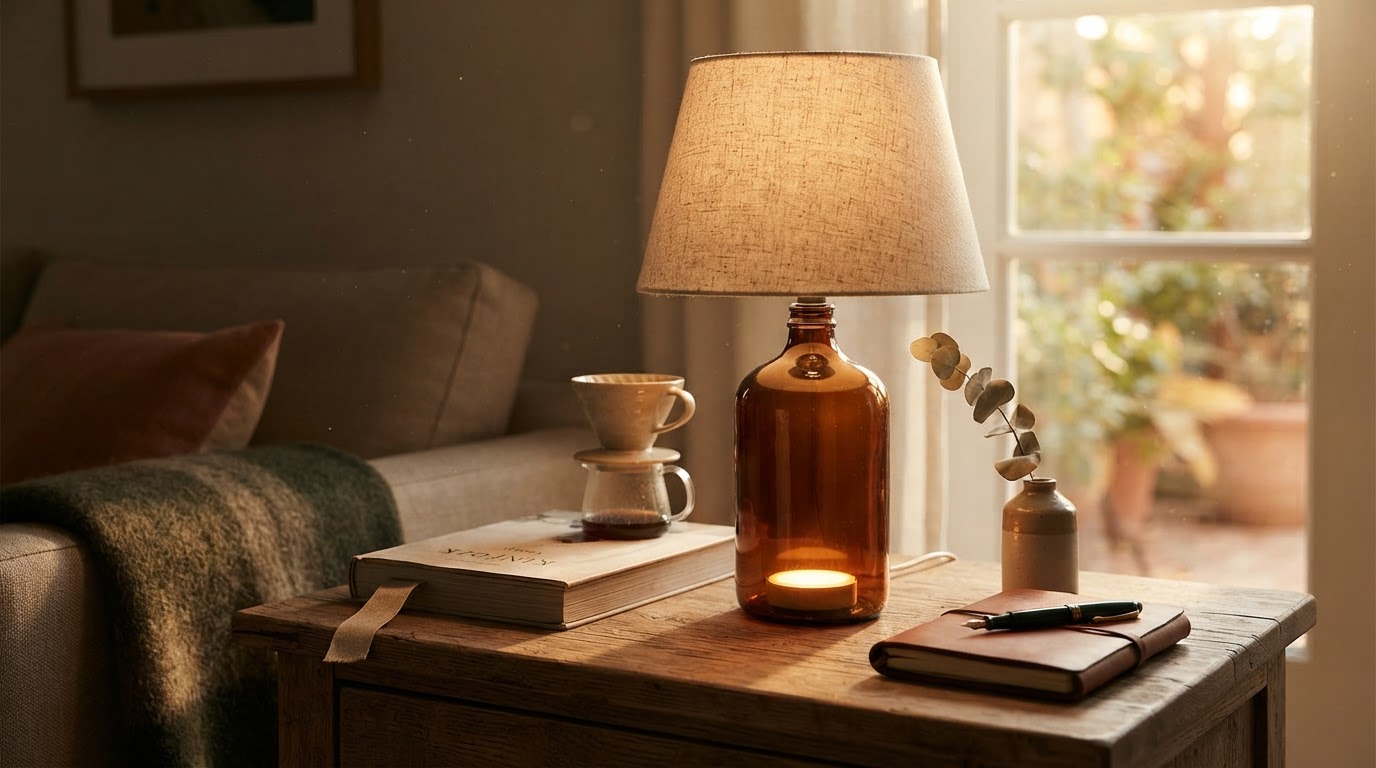
That is the central problem with bottle lamps: the bottle is not just a base. It is an optical modifier. Its color, shoulder shape, label, glass thickness, and opening diameter change the way the light behaves. A bottle lamp can look like a small table lamp, a candle alternative, a bar accent, or a gadget. The difference is rarely “brightness” alone.
Here is the framework I use when evaluating an LED bottle lamp for a kitchen counter, dining table, bar cart, patio dinner, or gift. It is intentionally practical: seven decisions, in order, that prevent the most common buying mistakes.
The bottle-lamp problem: you are buying a lighting system, not a novelty
A standard table lamp has three parts that are designed together: a light source, a shade, and a stable base. A bottle lamp separates those jobs. The LED module provides the light, but the bottle supplies the height, visual weight, and much of the diffusion.
That means two lamps with the same LED can look completely different on different bottles. A clear gin bottle can throw sparkle and glare. A frosted wine bottle can soften the light. A dark green bottle may reduce apparent brightness but improve mood. A squat whiskey bottle can feel stable; a tall, narrow bottle can look elegant but become easier to knock over.
The right question is not “How bright is it?” The better question is: “What job should this light do, and what bottle will make that job easier?”
My 7-point decision framework
Photo by Andrea Piacquadio on Pexels
1. Start with the room role, not the lamp
I divide bottle-lamp use into four roles:
- Table mood light: low glare, warm color, visible from seated eye level.
- Bar or shelf accent: decorative glow, interesting bottle silhouette, moderate brightness.
- Outdoor dinner light: cordless runtime, wind resistance, easy wipe-down.
- Gift or keepsake display: works with sentimental bottles and looks intentional even when off.
The U.S. Department of Energy notes that LEDs can deliver high efficiency and long life, but efficiency is not the same thing as comfort. For decorative lighting, comfort often comes from placement, color temperature, and shielding, not maximum lumens.
2. Choose color temperature before brightness
For bottle lamps, I prefer 2700K to 3000K for most indoor use. That range resembles warm residential light and flatters wood, amber glass, wine labels, and dinner settings. Cooler light can look crisp in a photo, but in a dining or lounge setting it often makes glass look clinical.
If you are choosing between a warmer lamp with fewer lumens and a cooler lamp with more lumens, I would usually take the warmer option for evening use.
This is not just aesthetic preference. Research on evening light exposure has repeatedly shown that brighter and bluer light can affect circadian signals more than dimmer, warmer light. I would not turn a decor purchase into a medical claim, but the direction is useful: night lighting should be calm, not aggressive. A widely cited NIH-indexed study by Cajochen and colleagues found human melatonin suppression is highly sensitive to short-wavelength light exposure.
3. Use the bottle as a diffuser
The bottle’s glass changes both the look and the comfort of the lamp. Here is a practical rule:
- Clear glass: brightest, most sparkle, highest glare risk.
- Frosted glass: softest light, usually the most lamp-like.
- Green glass: moody and traditional, reduces apparent brightness.
- Amber glass: warmest visual tone, excellent for cozy rooms.
- Labeled bottles: can look personal, but labels may create dark patches.
4. Check the neck fit like a mechanical part
A bottle lamp should feel like it belongs on the bottle, not like it is balancing on one. I look for three fit points:
Common wine bottle openings are often around 18–20 mm internally, but bottle lips, cork finishes, and decorative closures vary. Champagne, spirits, olive oil, and specialty bottles can be very different. If you plan to use one lamp across several bottles, prioritize an adaptable stopper or stable cap-style design.
5. Judge glare from seated eye height
This is the test most product photos hide. Put the lamp on the bottle, sit where a person would actually sit, and look toward it from normal eye level. If you can see a bright LED point directly, the lamp may feel harsh even if the total output is modest.
The International Electrotechnical Commission’s IEC 62471 standard addresses photobiological safety of lamps and lamp systems. Decorative bottle lamps for household use are not usually evaluated by shoppers through that lens, but the principle is relevant: light sources should be considered as systems, including exposure, distance, and viewing conditions.
For real rooms, I use a simpler consumer version: if I instinctively squint, turn it away, or move it behind a plant, the lamp is too exposed for that location.
6. Evaluate stability as a ratio, not a feeling
A bottle lamp raises the center of mass. That can be harmless on a heavy whiskey bottle and annoying on a narrow wine bottle.
My quick stability framework:
- Choose heavier bottles for high-traffic tables.
- Avoid very tall empty bottles near elbows, pets, or children.
- For patio use, prefer lower, wider bottles.
- If using a sentimental bottle, place it where it will not be bumped.
7. Treat charging and controls as part of the decor
A cordless bottle lamp that dies halfway through dinner fails its job. But a lamp with an awkward charging port or tiny hidden switch can also become irritating.
I look for:
- Runtime long enough for the actual event, not just a short demo.
- A control that can be found without lifting the bottle.
- Dimming or at least multiple brightness levels.
- Charging that does not require disassembling the whole display.
- A finish that still looks good when the lamp is off.
Field observations: what changed the look most
I tested a simple decision question rather than a laboratory one: what changes the perceived quality of a bottle lamp fastest in a normal room? The checks below were made in an evening living-room setting with the lamp viewed from seated distance, using the same LED bottle lamp module across different bottles and placements.
| Variable changed | Observed effect | Practical takeaway | |---|---:|---| | Clear bottle to amber bottle | Apparent glare dropped noticeably; the light felt warmer even at similar output | Amber glass is forgiving for evening rooms | | Clear bottle to frosted bottle | Hotspots became much less visible | Frosted bottles make the lamp feel less like a gadget | | 18-inch side-table placement to 30-inch shelf placement | Direct LED visibility decreased from seated positions | Height and sightline can matter as much as lumen output | | Tall narrow wine bottle to squat spirits bottle | Tip confidence improved substantially during bump tests by hand | For busy tables, bottle shape is a safety feature | | Cool white mode to warm white mode | Labels and wood tones looked more natural | Use cool light only when you want a crisp display effect |
These are not certification measurements; they are buying observations. But they match what lighting designers learn quickly: the eye is sensitive to contrast, glare, and color, not only measured brightness.
My take: a dimmer bottle lamp is often the more expensive-looking choice
Counter to what you’ll read elsewhere: I do not think the brightest LED bottle lamp usually looks the most premium.
Bright decorative light often exposes the mechanics: the diode, the plastic diffuser, the uneven glass, the label shadow, the reflection on the tabletop. A slightly dimmer warm lamp allows the bottle shape and room materials to do more of the work. It feels less like a device and more like atmosphere.
This is especially true with clear bottles. High brightness in clear glass can create sharp reflections that look fun for a party photo but tiring beside a sofa. If you want a bottle lamp to stay on for hours, choose comfort over punch.
A practical buying checklist
Use this before choosing a lamp or deciding which bottle to display.
For dining tables
- Choose warm white: ideally 2700K–3000K.
- Prioritize dimming over maximum brightness.
- Test from seated eye level.
- Use wider bottles if people will reach across the table.
- Avoid exposed LEDs pointing directly at faces.
For bar carts and shelves
- Use distinctive bottle shapes: square, ribbed, embossed, or colored glass.
- Match lamp finish to nearby hardware: brass, black, chrome, or wood tones.
- Put the lamp slightly behind or beside glassware to create layered reflections.
- If labels matter, rotate the bottle until the label is readable but not overlit.
For patios
- Check runtime before the event.
- Use heavier bottles with broad bases.
- Keep charging ports dry and bring the lamp indoors after use unless rated for outdoor exposure.
- Avoid placing tall bottle lamps near table edges.
- Use warmer light to reduce the “work light” feeling outdoors.
For gifts
- Pair the lamp with a meaningful bottle: wedding wine, anniversary champagne, favorite local spirit, or a travel keepsake.
- Include a note explaining the bottle choice.
- Choose a lamp finish that suits the recipient’s home, not just the bottle.
- If unsure, select a warm neutral finish and a dimmable lamp.
How to style one without making it look staged
Photo by Unggul Budi on Pexels
Bottle lamps work best when they are part of a small scene. A single glowing bottle in an empty corner can feel random. Put it in conversation with other objects.
Try one of these groupings:
- A wine bottle lamp, two books, and a small ceramic bowl.
- A whiskey bottle lamp, lowball glasses, and a dark tray.
- A champagne bottle lamp, framed photo, and brass candlestick.
- A frosted bottle lamp beside a plant to soften the shadow.
Care, safety, and common-sense limits
LEDs run cooler than incandescent lamps, which is one reason they suit decorative bottle lighting. Still, the lamp should have ventilation according to its design, and charging components should stay dry. Do not modify a battery-powered lamp, force it into a bottle opening, or use it with cracked glass.
If the lamp uses an internal rechargeable lithium battery, treat it like other rechargeable electronics: use the supplied or recommended charging cable, avoid charging on flammable soft surfaces, and stop using it if the battery case swells, overheats, or smells unusual.
For households with children or pets, the bottle matters as much as the lamp. A beautiful tall bottle on a narrow side table may not be the right choice. Use a shorter bottle, a less fragile location, or a heavier base.
FAQ
What color temperature is best for an LED bottle lamp?
For most homes, I would choose 2700K to 3000K. That range reads warm without turning orange. It is especially good for dining tables, bedrooms, living rooms, and bar carts. If the lamp is mainly for a modern shelf display, a cooler option can look crisp, but it is less relaxing for evening use.
Can I use any bottle with a bottle lamp?
Not always. The lamp must fit the bottle neck or top securely, and the bottle needs enough weight and base width for the location. Wine bottles, champagne bottles, whiskey bottles, and some olive oil bottles can work well, but openings and lip shapes vary. Always test wobble before leaving the lamp in use.
Are LED bottle lamps bright enough to replace a table lamp?
Usually, no—and that is not a flaw. A bottle lamp is better understood as accent or mood lighting. It can add glow to a dinner table, shelf, or bar area, but it will not replace a shaded reading lamp or overhead task light. If you need reading light, use a purpose-built lamp with controlled glare and adequate output.
Do colored bottles reduce brightness?
Yes, visually they often do. Green and amber glass absorb and tint some light, so the lamp may appear less bright than it does on clear glass. But that reduction can be beneficial. Colored bottles often reduce glare and make the lamp feel warmer, more integrated, and less electronic.
Sources
- U.S. Department of Energy: LED Lighting
- IEC 62471: Photobiological safety of lamps and lamp systems
- Cajochen et al., High sensitivity of human melatonin to short wavelength light, PubMed
- Illuminating Engineering Society: TM-30 color rendition resources