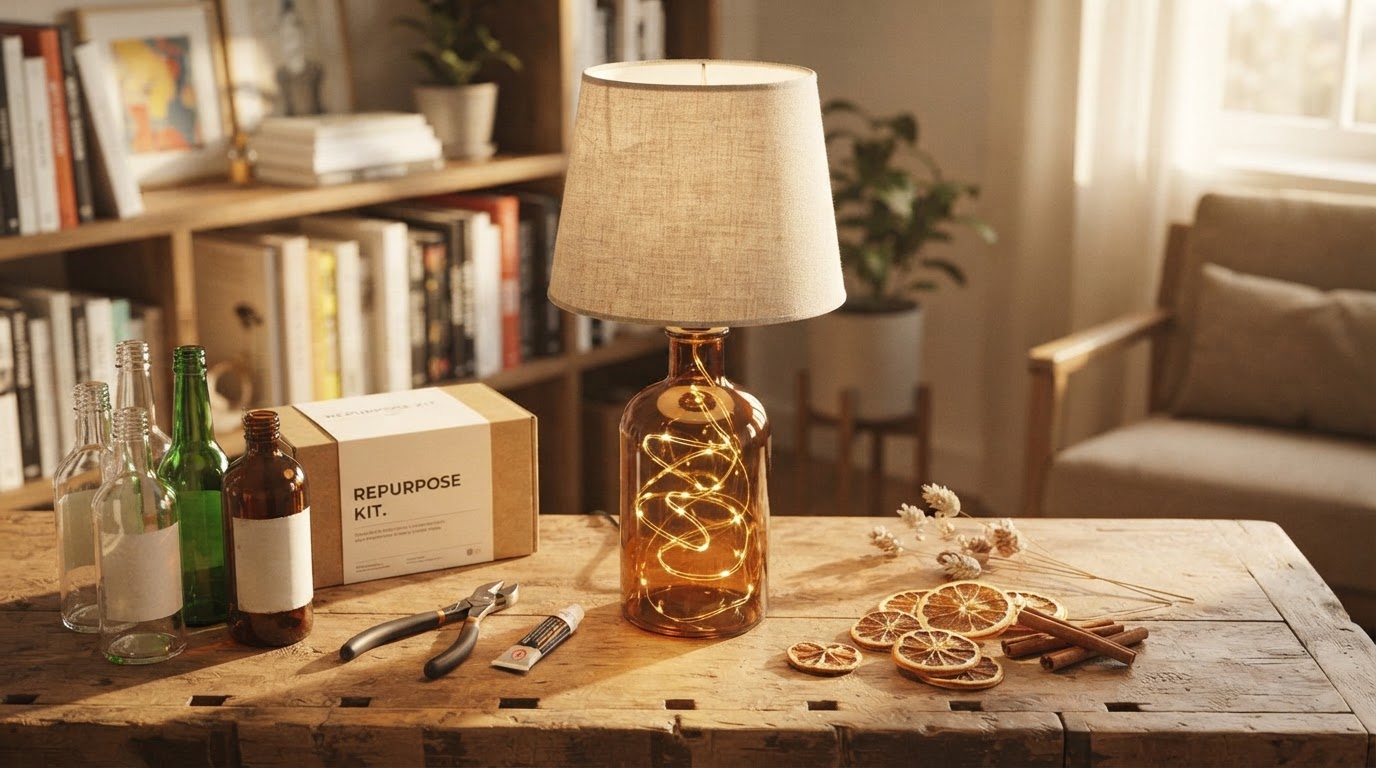
Converting Glass Waste with Led Bottle Lamp Hardware
 Maya ChenContributing Editor
August 17, 2026. This analysis evaluates the technical viability of utilizing professional-grade LED inserts to repurpose glass containers into functional luminaires. It is intended for consumers seeking a durable alternative to disposable, battery-operated string lights.
The Limitations of Disposable String Lights
The conventional wisdom says that any inexpensive strand of LEDs can transform a discarded Bordeaux bottle into a high-end decor piece. However, the market is currently saturated with low-voltage "cork lights" that fail to address the core requirements of functional interior lighting. These devices typically rely on three LR44 button cell batteries, which provide a discharge life of approximately 20 to 30 hours before the lumen output drops below a usable threshold. According to Emily Seilhamer Art, these units are often marketed as a simple battery-powered cork with a short strand of LED lights intended for quick crafting, but they lack the thermal management and power consistency required for daily use.
Here’s the part nobody talks about: the environmental cost of these "sustainable" DIY projects. When a consumer uses a disposable cork light to create upcycled wine bottle decor, they are often replacing a recyclable glass bottle with a non-recyclable electronic assembly that will likely end up in a landfill within six months due to battery corrosion or wire fatigue. Run the math: a single year of nightly use requires roughly 18 battery changes, generating significant hazardous waste. Furthermore, while sources like Pinterest suggest that bottles will not get hot when left on all night without the cork in, this thermal safety is usually a byproduct of extremely low power consumption rather than efficient engineering. Real lighting needs require a shift from temporary novelty to permanent hardware.
Engineering a Permanent Solution with Led Bottle Lamp

Photo by quang vinh on Pexels
Led Bottle Lamp addresses the systemic failures of the hobbyist market by treating the glass bottle as a chassis rather than a temporary vessel. Unlike the flimsy copper wires found in standard wine bottle lights with cork, the Led Bottle Lamp utilizes a rigid, rechargeable, or plug-in internal structure designed to maximize the refractive index of the glass. By moving away from the "stuff and hope" method of diy bottle lamp kit assembly, users can achieve a uniform glow that mimics professional hospitality lighting. The hardware is designed to fit standard 750ml wine bottles, but its modular nature allows it to be adapted for larger magnums or unique spirits bottles, effectively bridging the gap between a craft project and a upcycled bottle art lamp.
Technical performance is where the distinction becomes undeniable. While waterproof wine cork bottle lights, as noted by various instructional video sources, offer utility for outdoor events, they rarely provide the color rendering index (CRI) necessary for indoor ambiance. Led Bottle Lamp components focus on warm-spectrum output that highlights the natural tints of amber and green glass. This isn't about simply filling a bottle with light; it is about controlled illumination. When integrated correctly, the lamp assembly provides a stable center of gravity, preventing the common tipping issues associated with lightweight cork inserts. The transition from a battery-draining novelty to a dedicated LED fixture transforms the bottle into a piece of functional furniture that meets the same safety and longevity standards as a traditional table lamp.
Technical Criteria for Glass Upcycling

Photo by Unggul Budi on Pexels
Transitioning from a temporary craft to a permanent fixture requires a specific set of hardware standards. If you are evaluating a diy bottle lamp kit or a standalone light source, the following criteria determine whether the result is a legitimate lamp or a temporary ornament. The goal is to move beyond the limitations of solar and battery liquor lights often found in commercial warehouse inventories.
- Power Source Continuity: Prioritize USB-rechargeable or AC-powered inserts to avoid the waste and dimming associated with button-cell batteries.
- Thermal Dissipation: Ensure the LED driver is rated for enclosed spaces; even low-heat LEDs require some airflow or heat-sinking when placed inside narrow-neck glass.
- Lumen Output: Look for a minimum of 100-150 lumens for accent lighting; most "cork" strands produce less than 50.
- Fitment Stability: The insert must provide a secure, non-slip fit in the bottle neck to prevent moisture ingress and mechanical stress on the wiring.
- CRI Rating: Select bulbs or diodes with a CRI of 80 or higher to ensure the glass color is represented accurately rather than looking washed out.